
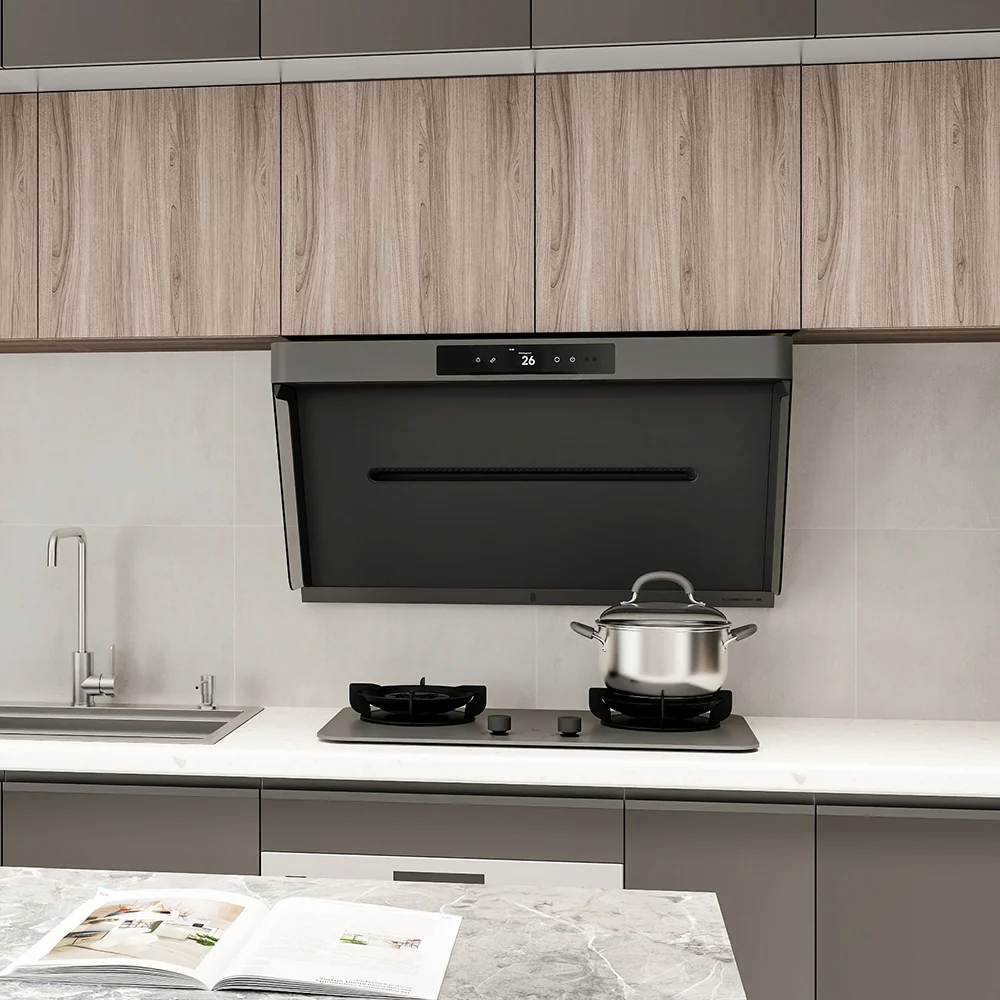
Cooking adds more than appealing aromas to a home. Heat, steam, grease particles, and lingering food odors can quickly make a kitchen uncomfortable, especially in a compact or poorly ventilated space. Good kitchen ventilation removes contaminated air near its source while helping fresh replacement air enter the room.
The best approach usually combines an effective range hood with sensible airflow habits rather than relying on one device alone.
Start With Ventilation Directly Above the Cooking Area
A range hood positioned above the cooktop captures steam, smoke, and airborne grease before they spread through adjoining rooms. Hoods that exhaust outdoors generally offer stronger moisture and odor control than recirculating models because the contaminated air actually leaves the house.
Coverage matters too. A hood that is narrow compared with the cooking surface may allow rising air to escape around the edges. Kitchens being redesigned around new cabinetry can use kitchen design references for broader visual planning while keeping ventilation clearances and duct routing in mind.
Use the Hood Before the Kitchen Gets Hot
Turning ventilation on shortly before cooking begins helps establish airflow early. Keep it operating while frying, boiling, searing, or using several burners.
Leaving the fan running briefly after cooking can also help remove residual humidity and smells that remain in the room.
Give Steam a Clear Route Outdoors
Ductwork has a major effect on how efficiently an exhaust hood works. Long duct runs, unnecessary bends, crushed flexible sections, or restrictive outlets create resistance that reduces airflow.
During a renovation, plan the shortest practical exhaust path before cabinets and finishes make changes difficult. Looking at layout planning inspiration can help homeowners think about appliance placement, but the exhaust route should remain a functional priority rather than an afterthought.
| Ventilation Feature | Main Benefit | Common Problem |
|---|---|---|
| Outdoor-vented hood | Removes heat and moisture | Restrictive ductwork |
| Recirculating hood | Filters some grease and odor | Does not exhaust humidity |
| Open window | Adds replacement air | Depends on weather |
| Exhaust fan | Improves general air movement | May miss cooking emissions |
Support Exhaust With Replacement Air
Air cannot leave a kitchen efficiently unless other air can replace it. In tightly sealed homes, a powerful exhaust system may struggle if there is no practical path for incoming air.
Opening a nearby window slightly can help during heavy cooking when conditions allow. Doorways and adjacent spaces also influence airflow, so interior comfort ideas can be considered alongside practical decisions about how connected rooms exchange air.
Large or especially powerful ventilation systems may require more deliberate makeup-air planning depending on the home and local building requirements.
Control Moisture Before It Spreads
Boiling large pots, simmering sauces, using several burners, and running a dishwasher can all raise kitchen humidity. Covering pots when practical reduces both cooking time and the amount of steam released into the room.
Wipe condensation from cool windows, backsplashes, and other surfaces rather than allowing repeated moisture to linger. Persistent condensation may indicate that ventilation is insufficient or that indoor humidity is already elevated elsewhere in the home.
Mistakes That Reduce Kitchen Ventilation
One common mistake is turning the hood on only after smoke or odors become noticeable. By then, pollutants may already have traveled beyond the capture area.
Another problem is treating a recirculating hood as equivalent to outdoor exhaust. Recirculating units can be useful where ducting is impossible, but they generally return filtered air to the kitchen rather than removing cooking-generated moisture.
Dirty grease filters also restrict airflow. Regular cleaning or replacement helps the fan move air more effectively.
Frequently Asked Questions
Should a kitchen range hood vent outside?
Outdoor venting is generally more effective for removing cooking heat, moisture, odors, and airborne contaminants. Recirculating systems can reduce some grease and smells, but they return the air to the room instead of exhausting it outdoors.
Does opening a kitchen window improve ventilation?
It can. A slightly open window may provide replacement air and help an exhaust fan work more effectively. Results depend on wind, weather, window location, and the strength of the mechanical ventilation system.
Why does my kitchen still smell after cooking?
Lingering odors can result from inadequate exhaust airflow, dirty filters, weak hood coverage, grease deposits, or stopping the fan too soon. Cleaning surfaces and filters while improving exhaust duration often helps.
Make Airflow Part of Everyday Cooking
Effective kitchen ventilation starts close to the cooktop and continues through a clear exhaust route, adequate replacement air, and routine maintenance. Use the hood early, manage steam at the source, and keep filters clean. Small habits can make a noticeable difference in how comfortable the kitchen feels after everyday meals.