

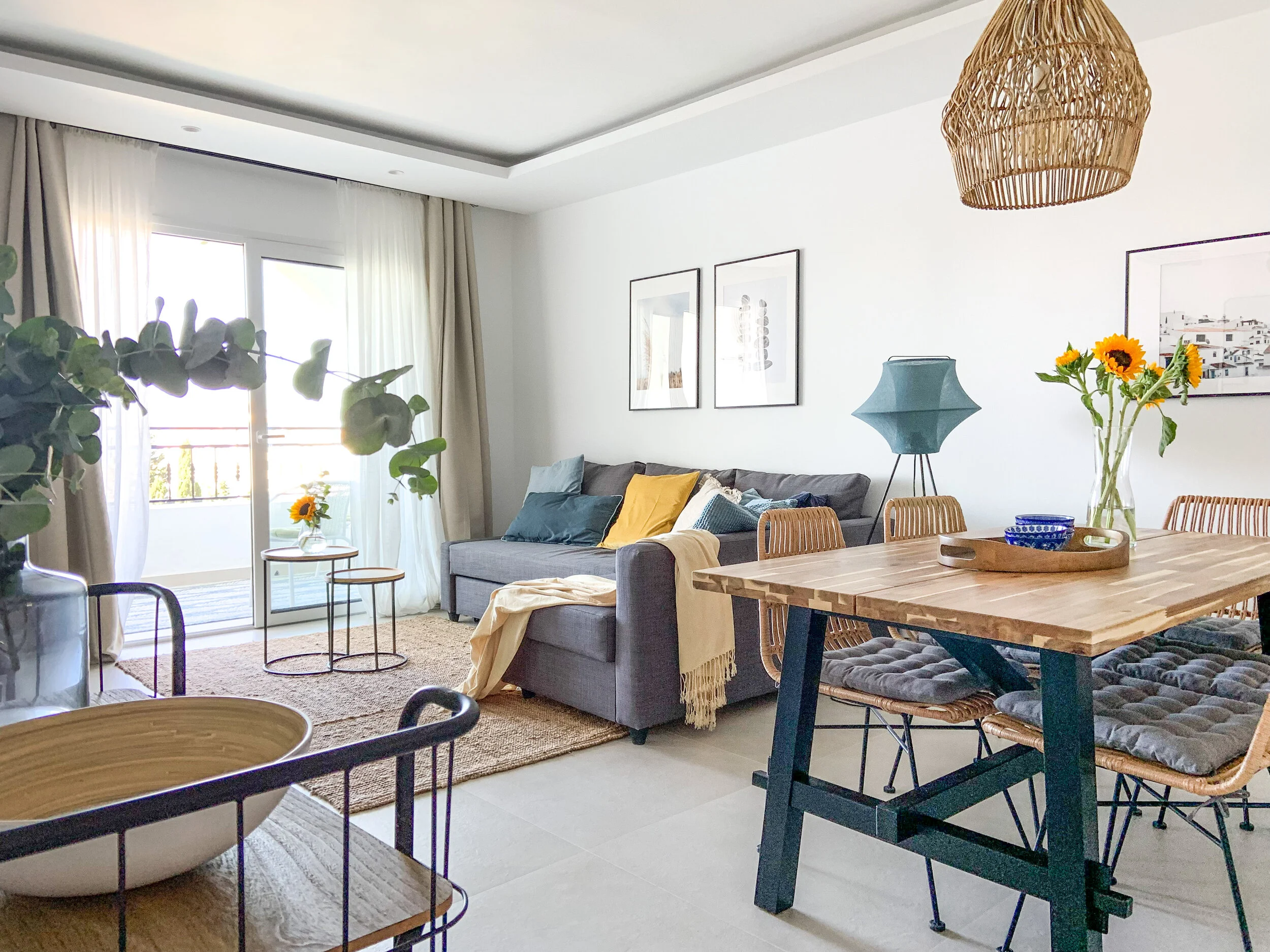
Anyone who has spent a slow week in a Mediterranean coastal town comes back home thinking the same thing. Why does life feel different there? Some of it is the climate and the food. But a real portion of the answer comes from the homes themselves. The way Mediterranean houses are designed encourages a way of living that most modern urban homes actively prevent. Here are five home design ideas inspired by Mediterranean vacation living that translate well to almost any home environment.
1. Outdoor rooms, not just outdoor space
Mediterranean homes do not have backyards. They have outdoor rooms. The difference matters. A backyard is grass with maybe a barbecue and some lawn chairs. An outdoor room has a defined floor surface, defined boundaries, comfortable seating, lighting for evening use, and shade for daytime use. It is genuinely a room of the house that happens to not have walls or a ceiling.
Converting a portion of your existing outdoor space into a proper outdoor room is one of the highest-impact home improvements available. The investment is modest. The effect on how you actually use your home is dramatic.
2. Slow morning spaces
Mediterranean coffee culture happens slowly. Morning coffee takes 45 minutes, not five. The home design that supports this is a small, dedicated space, such as a window seat, a corner of the kitchen with a small table, or a sheltered balcony, that exists for the sole purpose of slow morning routines. The space is small, but it has everything needed for an unhurried start to the day. The recent Mediterranean lifestyle feature in Luxury Travel Magazine captures how this slower pace permeates everyday life in coastal Mediterranean communities.
3. Communal eating as default
Mediterranean homes are designed around shared meals. The kitchen and dining areas are usually open to one another. The table is large relative to the rest of the room. There is room for guests to drift in without disrupting the cooking. Many North American and Northern European homes design dining as an event space used a few times a year. Mediterranean homes design it as everyday infrastructure.
Even in a small home, prioritising a generous table over a larger sofa changes how the home gets used. People who get this right report that they entertain more, their families eat together more, and the home feels more central to their lives.
4. Light and shade, not just light
Mediterranean architecture treats shade as a positive design element. Pergolas, shutters, deep overhangs, and trellises all create areas of comfortable shade that make outdoor and indoor spaces usable through the heat of the day. Modern home design often focuses entirely on maximum light, which produces homes that are uncomfortable in summer afternoons and require constant air conditioning.
Even small interventions like adding exterior shutters that can be closed during the hot part of the day, or installing a simple wooden pergola over an outdoor seating area, change how the home performs through the seasons.
5. Plants as architecture, not decoration
Mediterranean homes use plants as integral architectural elements. A grape vine forms a natural ceiling. Olive trees in large pots create room divisions. Climbing jasmine forms walls. These are not decorative additions. They are structural elements that shape how the space works. The cumulative effect is that the boundary between home and garden becomes blurred. This is a defining feature of Ibiza and other classic Mediterranean destinations where homes seem to grow out of their surroundings rather than being placed on them.
Why these ideas work outside the Mediterranean
These design principles are not climate-dependent. They are lifestyle principles disguised as design choices. A North American suburban home that creates a real outdoor room, prioritises shared eating, balances light with shade, and incorporates plants as structural elements feels more relaxed and more lived-in even without the Mediterranean climate. The vacation feeling that draws people back year after year is not actually about the destination. It is about how the spaces are designed to support a slower, more communal way of living. That can be imported home.
