

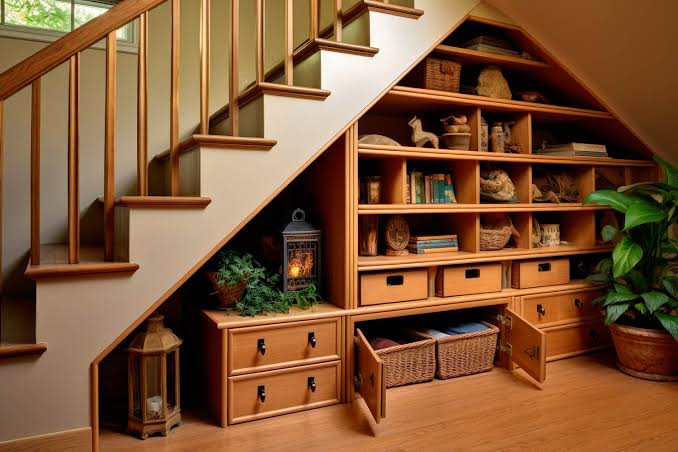
Storage problems do not always mean a home needs more cupboards, shelves, or furniture. In many cases, useful space already exists but has never been properly considered. Corners, walls, gaps, and overlooked sections of rooms can often accommodate everyday belongings without making the home feel crowded.
As households accumulate clothing, kitchenware, paperwork, hobby supplies, seasonal items, and countless other possessions, making better use of existing space becomes increasingly valuable. Instead of immediately buying another cabinet, it may be worth looking around the home for areas that are currently doing very little.
Look Above Doors and Windows
The wall space above doors and windows is commonly left empty. While these locations may not be convenient for things used every day, they can provide excellent storage for less frequently needed belongings.
A shelf above a doorway can hold books, decorative boxes, spare linens, or seasonal accessories. In a kitchen, high shelving can accommodate serving dishes and appliances reserved for special occasions.
Ideas featured in an Australia online publication may provide inspiration, but the most effective storage choices ultimately depend on the layout of the individual home. The goal is to use vertical space without making rooms appear visually overloaded.
Put the Space Under the Stairs to Work
In multilevel homes, the area underneath a staircase can contain a surprising amount of unused space. Sometimes it becomes an informal dumping ground, while in other homes it is completely enclosed and forgotten.
Depending on its dimensions, this area could become a shoe cupboard, bookcase, household supply cabinet, compact workstation, or even organized storage with pullout drawers. Custom solutions can maximize unusual angles, but simple shelves and storage containers can also make a considerable difference.
Homeowners researching renovation and organization ideas through resources such as melbwire.com.au may discover that improving a home does not necessarily require changing its overall footprint. Better use of existing areas can sometimes achieve just as much.
Reconsider the Space Under Your Bed
The area beneath a bed is one of the most obvious storage locations, yet it is frequently underused or poorly organized. Random items pushed underneath the bed can quickly become forgotten.
Low storage containers provide a much better system. They can hold spare bedding, winter clothing, shoes, luggage accessories, or items used only occasionally. Beds with built in drawers can be especially useful in smaller bedrooms.
For family households, organization discussions associated with resources such as The Parent Australia can also encourage a broader look at how children’s rooms are arranged. Under bed storage can give toys, books, craft supplies, or outgrown clothing a designated location while keeping more floor space available.
Do Not Ignore the Backs of Doors
A door occupies almost no additional floor space, making its reverse side particularly useful for storage. Over door organizers, hooks, rails, and narrow racks can create practical places for smaller possessions.
Bedroom doors can hold bags or accessories. Bathroom doors may provide space for towels or grooming products. Pantry doors can accommodate lightweight kitchen supplies. Inside wardrobe doors, hooks can keep belts, scarves, jewelry, or other accessories organized.
The key is moderation. Loading a door with too many heavy items may affect its operation and create unnecessary visual clutter.
Explore the Tops of Cabinets
Kitchen cupboards and freestanding wardrobes often stop well below the ceiling, leaving an awkward gap above them. These areas can collect dust when they could instead provide storage.
Attractive baskets or matching containers can turn this unused space into a home for occasional items. In the kitchen, consider storing specialty cookware, picnic equipment, or supplies used for entertaining. Above wardrobes, containers can hold seasonal clothing, spare blankets, or travel accessories.
Labeling containers is helpful because high storage is less useful when nobody remembers what is inside.
Make Corners More Useful
Corners can be surprisingly difficult to furnish. Standard cabinets and rectangular furniture may leave them unused, particularly in compact rooms.
Corner shelves offer one straightforward solution. In kitchens, rotating organizers can improve access inside deep corner cabinets. In living rooms, narrow corner units can accommodate books, plants, media accessories, or decorative objects.
Lifestyle resources such as The Lovers Point can inspire people to think about how their surroundings support daily life. Storage should serve the household rather than simply provide somewhere to hide clutter.
Use the Garage Walls Instead of Just the Floor
Garages frequently contain substantial storage potential, but poor organization can turn them into crowded spaces where items are difficult to find. One common mistake is placing almost everything on the floor.
Wall mounted shelving, pegboards, hooks, and tool racks can move possessions upward. Bicycles, gardening equipment, sporting goods, ladders, and tools can often be stored vertically. Ceiling mounted systems may also work for lightweight seasonal items, provided they are properly installed and do not interfere with vehicles or garage doors.
Turn Forgotten Space Into Functional Space
Effective storage is less about filling every available gap and more about identifying spaces that can serve a useful purpose. Above doors, beneath beds, behind doors, under staircases, over cabinets, and along garage walls are just a few possibilities.
Before adding more furniture, walk through each room and deliberately look at the empty spaces. A carefully positioned shelf, hook, basket, drawer, or storage container may be enough to solve a problem that once seemed to require an entirely new cupboard.
When forgotten areas are used thoughtfully, possessions become easier to organize and rooms can remain more open. Sometimes the storage a household needs has been there all along, simply waiting to be noticed.


