

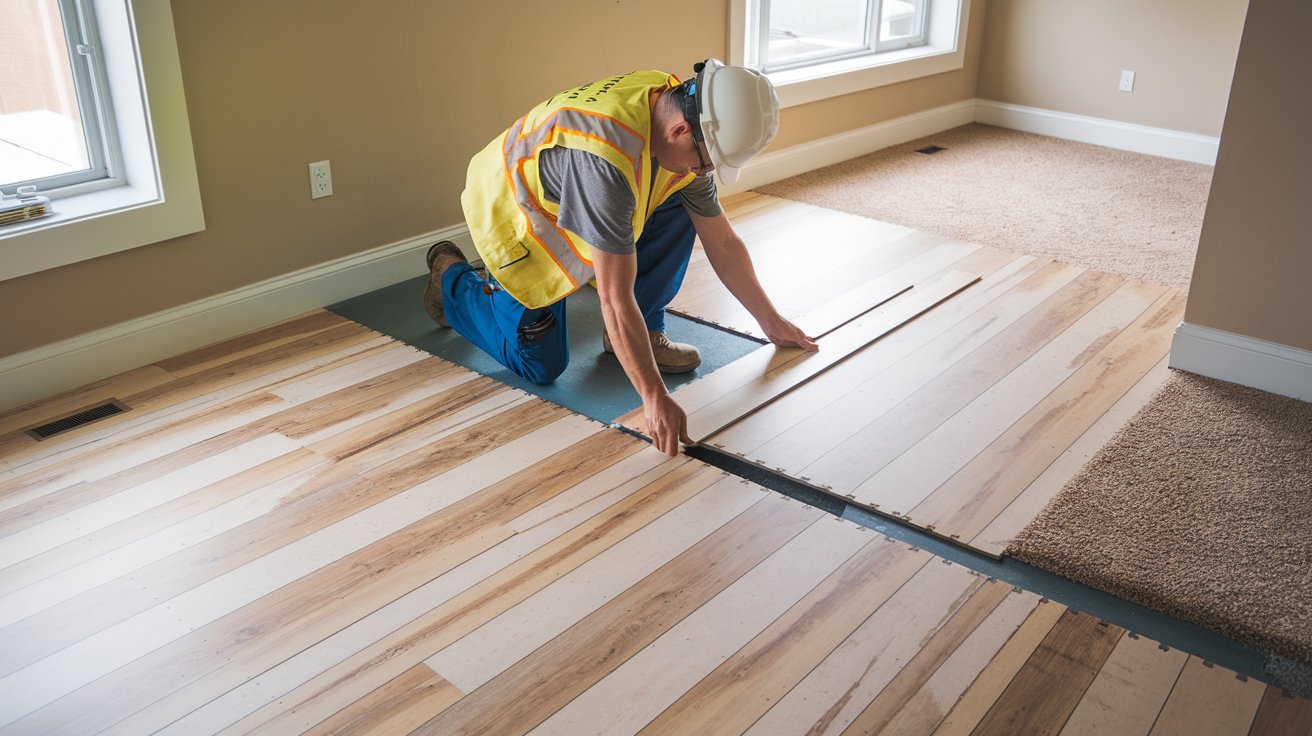
Thinking about putting in new floors yourself? It can save money and make your home feel fresh. But have you thought about what might go wrong? Boards can shift when you walk. Gaps can show up between the planks. Floors might squeak every time you step.
Before you start your flooring installation, it helps to know what mistakes to avoid. Skipping checks, cutting too fast, or missing small steps can lead to problems. Knowing these now will help you finish your floors with fewer issues later.
06 Mistakes to Look Out For While Installing Floors Yourself
Here’s what to look out for before you start so you can avoid the biggest problems.
Not Checking the Floor First
Many people lay down new boards without looking at what’s under them. But if the floor under your boards is not clean and flat, you will feel it later. You might hear squeaks or see boards that move when you walk on them.
Take a few minutes to sweep the floor and check for bumps. Sand down high spots. Nail down any loose boards. If your floor is concrete, make sure it is dry before you start. Doing these checks helps your floor stay quiet and solid. It also helps you avoid issues that are harder to fix once your boards are in place.
Not Letting Boards Sit in the Room
It’s easy to get excited when your new boards arrive. You may want to start right away. But wood and other boards need to get used to the air in your home before you put them in. If you skip this, the boards might change shape later. This can leave gaps or make the boards push against each other.
Let your boards sit in the room where you will install them for a few days. This helps them adjust before you lock them in place. It may feel like a slow step. But it makes a big difference in how your floors will look and feel when you are done.
Skipping the Base Layer
Some people skip the base layer to save time. But this layer helps with bumps and moisture. It can also make your floor feel softer when you walk on it. If you skip it, your floor might squeak or get damaged by moisture later.
Check what the instructions say for your boards. Use the base layer they suggest. It’s a simple step that helps your floor last longer. You can count on this step to help your floors hold up better. Even in areas of your home where people walk the most.
Cutting Boards Too Quickly
Cutting boards may feel easy. But if you rush, you might cut the boards too short or at the wrong angle. This can leave gaps you will see when the floor is done. Take your time when you measure and mark your cuts.
Check your marks before you cut. If you need to fit a board around a corner, test it before you put it in. This helps you avoid wasting boards and makes the floor look clean. It is worth slowing down during this part. It helps you avoid mistakes that will stand out when the project is finished.
Forgetting to Leave Gaps Along the Wall
Floors need space to move as the weather changes. If you put your boards tight against the wall, they can push against each other and bend. You might see boards pop up or crack over time. Leave a small gap along the walls when you install your boards. Later, you can cover the gaps with trim so they will not show. This helps your floor stay flat and in place. It also protects the edges of your boards.
Not Planning the Direction
The way you lay your boards changes how your room looks. If you don’t plan, the room may look off when you finish. It often looks better if you lay the boards along the longest wall. You can also lay them in the direction the light comes in.
Check how the boards under your floor run. Laying your new boards across them can help the floor feel stronger. Taking time to plan will help your room look right. A quick layout check before you start can save you from having to redo sections later.
Conclusion
Putting in your own floors can save you money and let you make your space feel new. But there are mistakes that many people make during flooring installation. Skipping checks, not letting boards adjust, skipping the base layer, rushing cuts, forgetting to leave gaps, and not planning the direction can all lead to problems later.
Taking your time with these steps helps you avoid squeaks and gaps. It helps your floor stay in place and look good for years. It also helps you feel proud of the work you did in your home.