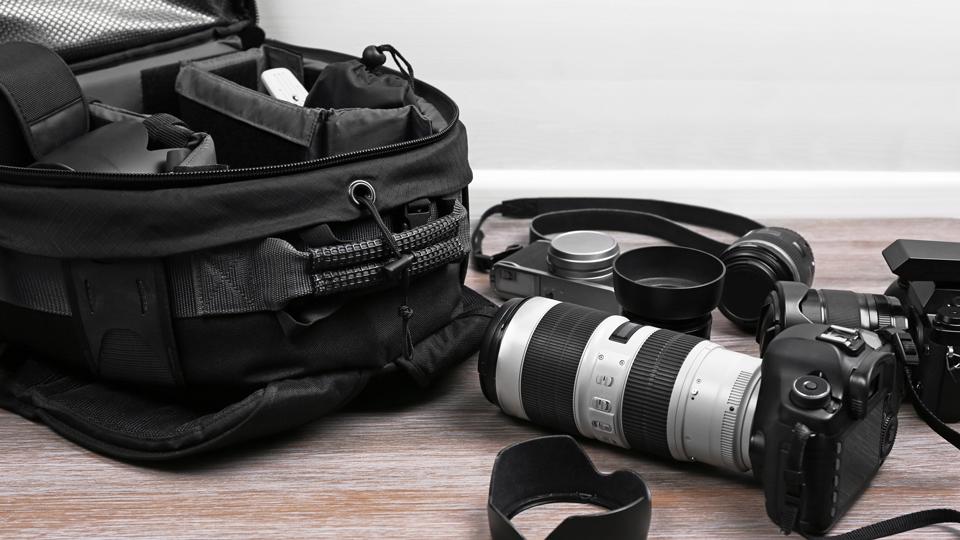
Photography equipment becomes difficult to manage long before a collection looks large. A few camera bodies, several lenses, batteries, stands, and rolled backdrops can quickly fill shelves while leaving the item you need buried underneath everything else.
Good photography gear storage protects delicate equipment while making frequent setup less frustrating. The strongest systems separate fragile electronics, everyday accessories, and bulky studio pieces instead of forcing them into one cabinet.
Build Storage Around How Often Gear Is Used
Start by separating daily equipment from occasional tools. Your main camera, favorite lenses, cards, batteries, and cleaning supplies should sit within easy reach, while specialty flashes or seasonal props can occupy higher shelves.
Closed cabinets are helpful for equipment that attracts dust. Open shelving can still work for larger accessories, especially in creative rooms where broader interior inspiration influences how storage blends with furniture rather than looking like warehouse shelving.
Give Cameras and Lenses Protected Zones
Padded dividers make drawers far more useful than deep empty spaces. Each camera body and lens should have its own compartment so equipment doesn’t roll, slide, or knock against neighboring pieces.
Keep lens caps, filters, and adapters close to the equipment they belong with. Small labeled trays prevent these inexpensive but essential pieces from disappearing.
Create a Charging and Battery Area
Loose batteries scattered across several drawers make it difficult to know what’s charged. A dedicated charging shelf can hold chargers, spare batteries, power strips, and small cases without taking over the editing desk.
Cable routing matters here. A narrow channel behind the cabinet keeps cords controlled while preserving the cleaner appearance often associated with carefully planned porch and home spaces and other organized living areas.
| Storage Zone | Best For | Main Benefit |
|---|---|---|
| Padded drawer | Cameras and lenses | Impact protection |
| Shallow bin | Cards and batteries | Fast access |
| Tall cabinet | Stands and tripods | Vertical storage |
| Wide rack | Backdrops | Prevents crushing |
Store Tripods and Backdrops Vertically
Tripods, light stands, and boom poles consume surprising amounts of floor space when stored horizontally. A tall cabinet, wall-mounted bracket, or sturdy corner rack lets them stand upright without leaning into walking paths.
Backdrops need different treatment. Rolled paper should remain supported so edges do not flatten, while folded fabric needs enough space to avoid becoming a compressed bundle. Planning those larger items resembles organizing other space-hungry materials, where thoughtful property organization ideas can encourage better use of vertical areas.
Keep Small Accessories From Becoming Clutter
Memory cards, remote triggers, clamps, cold-shoe adapters, and cleaning brushes are the pieces most likely to vanish. Divided organizer boxes work well because every category receives a visible home.
Labeling can stay simple. Short names such as “audio,” “mounts,” “power,” and “cleaning” are easier to maintain than dozens of hyper-specific labels.
Where Photography Storage Often Goes Wrong
One common mistake is designing storage around appearance alone. A beautiful deep cabinet may be useless if equipment becomes stacked three layers deep.
Another problem is putting every item behind a door. Frequently used tools should be protected but accessible. Storage works best when the effort required to put equipment away is almost as low as the effort required to pick it up.
Frequently Asked Questions
Should cameras be stored in airtight containers?
Usually not. A clean, dry cabinet with reasonable airflow is more practical for routine home storage. Extremely damp environments may require additional moisture control.
Is it safe to store lenses standing upright?
Yes, provided each lens is stable, capped, and protected from falling objects. Padded dividers can reduce movement inside drawers or cabinets.
How should photography backdrops be stored?
Rolled backdrops generally benefit from horizontal supports or dedicated tubes, while fabric backdrops can be folded loosely or hung where space allows.
Make Every Piece Easy to Return
The best photography storage system isn’t the one with the most compartments. It’s the one that makes the correct storage location obvious.
Give fragile gear protected compartments, isolate charging equipment, and reserve vertical space for long studio pieces. Once every item has a logical home, both setup and cleanup become noticeably faster.