

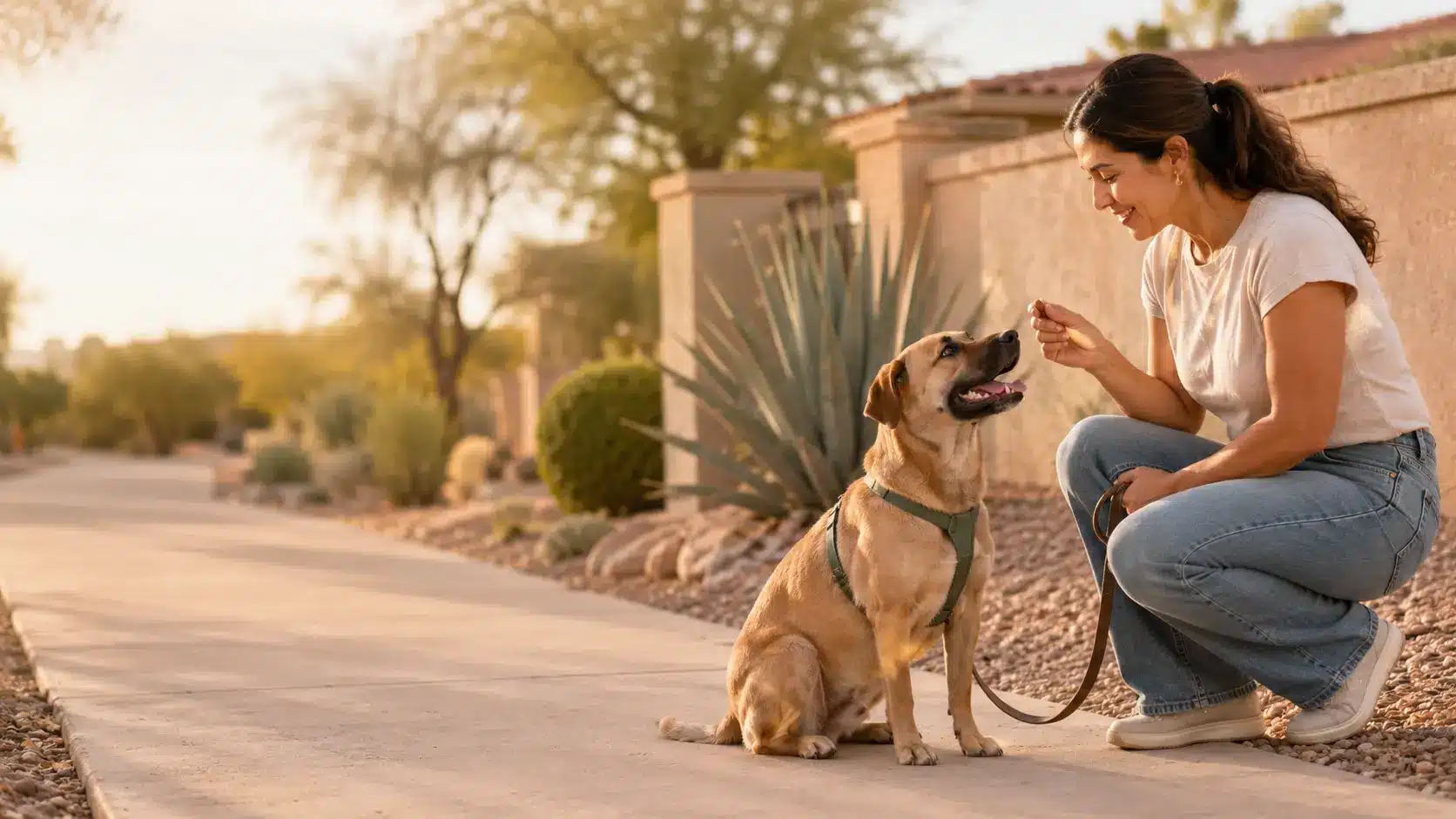
North Scottsdale dog training should prepare dogs for more than responding to basic commands in a quiet room. Dogs need to listen around distractions, walk calmly, settle at home, and respond reliably when real-life situations become unpredictable.
The most effective approach combines structured obedience, practical behavior work, and owner education so good habits continue beyond the training session. Rob’s Dog Training provides professional guidance designed to help owners build these skills and maintain them in everyday situations.
Why North Scottsdale Dog Training Should Focus on Real Life
A dog may sit perfectly in a controlled environment but struggle when another dog walks by, a visitor arrives, or an exciting outdoor distraction appears. This difference between knowing a command and applying it consistently is one of the biggest challenges owners face.
Training should therefore build reliability across different environments. Dogs need opportunities to practice listening around people, other animals, sounds, movement, and changing surroundings.
For North Scottsdale families, this can be especially important because daily routines often include neighborhood walks, outdoor activities, visitors, and busy public environments. A well-trained dog should be able to participate in these experiences without becoming difficult to control.
What Effective Dog Training Should Teach
Good training is not simply about collecting commands. It gives dogs a clear understanding of what is expected and teaches owners how to communicate those expectations consistently.
Important areas of training can include:
- Basic obedience: Sit, down, stay, place, heel, and recall create a foundation for communication.
- Leash manners: Dogs learn to walk without constantly pulling, lunging, or zigzagging.
- Impulse control: Dogs practice waiting, settling, and thinking before reacting.
- Recall reliability: Coming when called is particularly important when dogs are given greater freedom.
- Distraction control: Dogs learn to maintain focus when people, dogs, sounds, and movement compete for attention.
- Household boundaries: Clear expectations can help reduce jumping, excessive excitement, and other unwanted behaviors.
These skills work together. A dog that understands “stay” but cannot remain composed around distractions may still be difficult to manage in everyday situations.
North Scottsdale Dog Training Should Be Customized
Every dog learns differently. Age, temperament, energy level, confidence, breed characteristics, previous experiences, and existing behavior patterns can all influence how training should be approached.
For that reason, a standardized program may not address the actual reason a dog struggles.
A useful training plan begins with understanding the dog. Is the problem a lack of training, excessive excitement, inconsistent boundaries, fear, reactivity, or simply insufficient practice? Identifying the underlying pattern allows training to address the behavior rather than repeatedly correcting its symptoms.
This individualized approach is particularly valuable for dogs dealing with barking, leash reactivity, anxiety, jumping, poor recall, or difficulty settling. Private lessons, for example, can allow training to focus directly on the dog’s behavior, temperament, environment, and household routine.
Building Impulse Control and Calm Behavior
Impulse control is one of the most useful skills a dog can develop.
Instead of immediately reacting to every exciting event, a dog learns to pause, pay attention, and wait for direction. This can make everyday situations much easier to manage.
Owners can reinforce impulse control through simple routines:
- Ask for a calm behavior before opening doors.
- Practice waiting before meals.
- Reward calm greetings instead of jumping.
- Encourage dogs to settle while people move around the home.
- Gradually increase distractions while practicing familiar commands.
The goal is not to suppress normal enthusiasm. It is to teach dogs when excitement is appropriate and when calm behavior is expected.
Over time, consistent practice can help dogs make better choices instead of relying on immediate reactions.
Leash Training Makes Everyday Walks Easier
Leash behavior is another important part of practical obedience.
Pulling, lunging, zigzagging, and reacting to people or other dogs can make walks stressful. Simply holding the leash tighter does not necessarily teach the dog what appropriate walking looks like.
Effective leash training teaches dogs to pay attention to their handlers and respond to direction while distractions are present. Training can address leash pressure, handler timing, focus, and calm movement.
The objective is a dog that can walk with its owner instead of constantly deciding where the walk goes.
For dogs with more significant reactivity, the training approach should also account for triggers and the intensity of the response. Private training can provide an opportunity to work directly in environments where those behaviors occur.
Choosing Between Private Lessons and Board & Train
The right training format depends on the dog and the owner’s circumstances.
Private Dog Training Lessons
Private lessons can be a strong option for owners who want hands-on involvement. One-on-one instruction allows the trainer to focus on the specific dog while teaching owners how to continue the work between sessions.
This approach can be especially useful when behavior is closely connected to the home environment, walking routine, or owner handling.
Board & Train
Board & Train can be more convenient for owners with demanding schedules or dogs that benefit from consistent training throughout the day. Dogs stay at a professional facility and receive structured training before returning home.
However, the owner’s role does not end when the dog comes home. Maintaining progress requires understanding the commands, routines, boundaries, and handling techniques established during training.
Rob’s Dogs currently offers both Board & Train and private one-on-one training programs, with owner instruction included as part of the process.
Why Owner Participation Matters
One of the most overlooked parts of dog training is what happens after the trainer leaves.
Dogs learn through repetition and consistency. If a dog is expected to remain calm one day but allowed to jump on guests the next, the mixed message can make progress harder.
Owners should know:
- Which behaviors are expected at home
- How to give commands clearly
- When and how to reward appropriate behavior
- How to respond consistently to unwanted behavior
- How to practice around gradually increasing distractions
Good training should teach owners, not just dogs. Rob’s Dogs emphasizes owner education so families can reinforce training after lessons and maintain progress as part of their normal routine.
How to Choose a North Scottsdale Dog Trainer
Before selecting a training program, consider more than proximity or a list of commands.
Ask these questions:
Does the trainer assess my individual dog?
A professional should consider temperament, behavior, learning style, and goals before recommending an approach.
Does training work beyond a controlled environment?
Dogs should gradually learn to respond around realistic distractions.
Will I learn how to maintain the results?
Owner education is essential because training continues every day at home.
Are the methods appropriate for my dog?
Look for an approach that provides clear structure without relying on harsh corrections. Rob’s Dogs describes its methods as results-driven, reward-based, and free from harsh corrections.
Does the program fit my lifestyle?
A training plan only works when owners can realistically maintain it. Private lessons and Board & Train may suit different schedules and levels of owner involvement.
Training for Long-Term Results
The best measure of dog training is not how well a dog performs during one lesson. It is how reliably that behavior carries into everyday life.
A trained dog should be able to listen at home, walk appropriately, settle when needed, respond around distractions, and follow direction when excitement increases. These skills make training useful because they directly affect how dogs and owners interact every day.
North Scottsdale dog training is most valuable when it creates habits that remain useful after formal instruction ends. Structure, consistency, realistic practice, and owner involvement all contribute to that goal.
For families looking for professional guidance, Rob’s Dogs provides dog training services for North Scottsdale and surrounding Scottsdale communities, including Board & Train and private training options.
Ready to create clearer communication and more dependable behavior with your dog? Visit Rob’s Dogs to learn more about available training programs and request a consultation.